Transport
How a Chinese railway station works
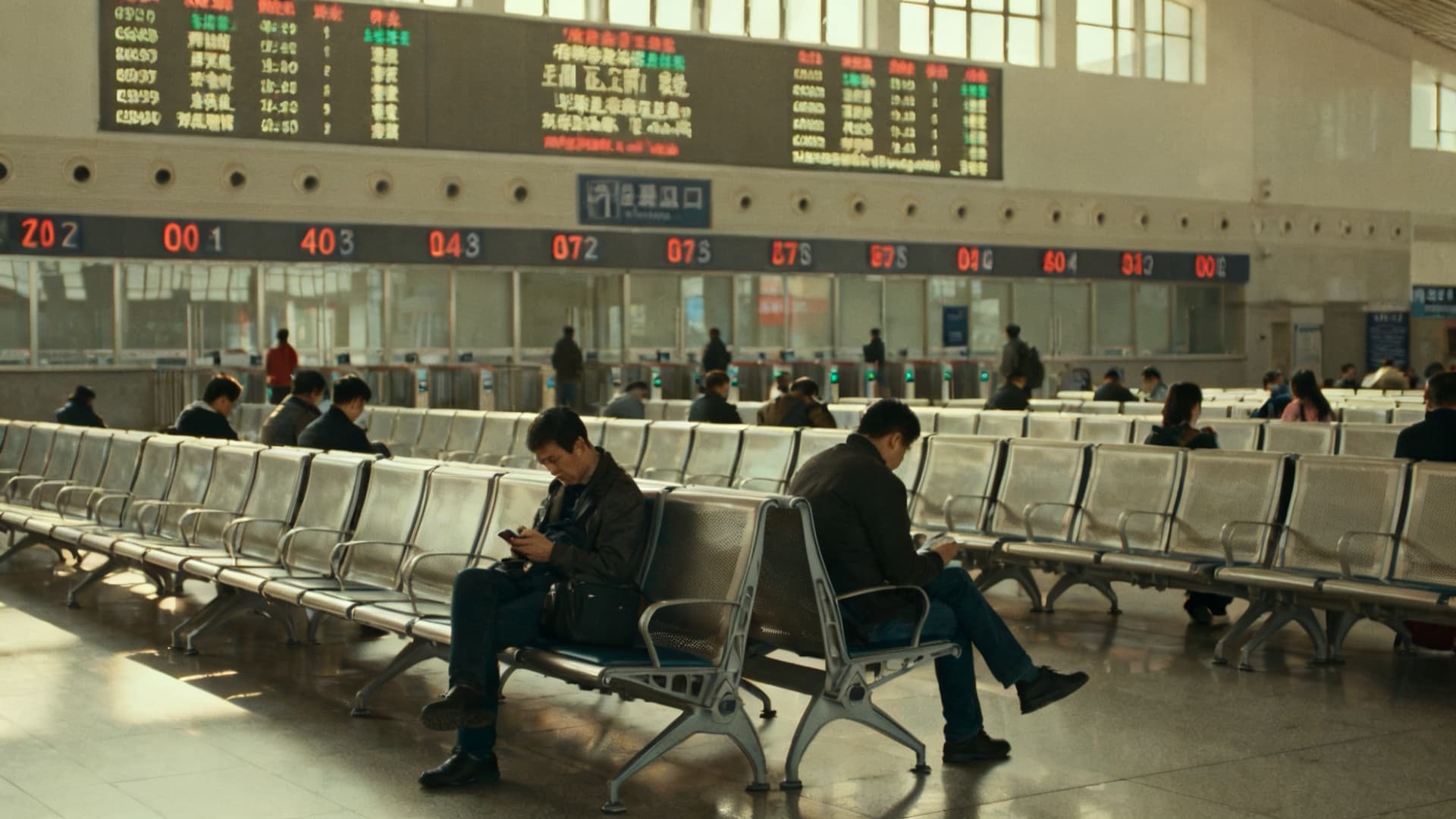
A Chinese station works like an airport: security, a waiting hall, a gate and boarding at a set time. The visitor’s main mistake is going to the wrong one.
Worth knowing
“Beijing”, “Beijing South” and “Beijing West” are three different stations at opposite ends of the city, an hour apart by metro. The same is true in Shanghai, Guangzhou and Nanjing. Check the station on your ticket against the map before you set off, not the city name.
The order of steps
Entry and security
At the entrance there is an archway and a baggage belt, as at an airport. You will be asked to open your water and take a sip. At rush hour the entrance queue takes 10–20 minutes.
The document check
Straight after security comes the ticket and document check. Look for the manual window: the automatic gates usually will not read a foreign passport.
Find your gate on the board
The board shows the train number, the time, the waiting hall (候车室) and the gate (检票口). Go by the train number: it is the only thing that does not change.
Wait at the right gate
The waiting hall is large and has several gates. Sit near yours — announcements are repeated in characters on the board, and you may not catch them over the loudspeaker.
Boarding
The gate opens about 15–20 minutes before departure and closes a few minutes before it. From the gate to the platform there is still a walk, usually down an escalator.
How to read the ticket
There are four numbers you need on the ticket: the train number (G, D or C with digits), the departure time, the carriage (车厢) and the seat (座). The platform is not printed on the ticket — it appears on the board.
Find your carriage from the markings on the platform floor: they are numbered and match the carriage numbers. Stand at your mark — at an intermediate station the train may stop for two minutes.
The carriage class is shown both as a number and by colour on the board at the entrance. Second class has the longest boarding queues; that is normal.
Tip
If you get lost, show your ticket to any member of staff in uniform. Station staff are used to bewildered passengers and will take you to the right gate quickly and without a word; you will not need to explain anything.
What else comes in useful
Large stations connect directly to the metro, but the walk inside the building takes 10–15 minutes. Allow for that on top of the journey.
Left luggage is available almost everywhere and paid by QR. Useful when your train is in the evening but you have to check out at midday.
Food at the station is dearer and worse than in town. Easier to buy something on the way: high-speed trains have a trolley, but the choice on it is small.
At large stations the exits to the street are separated: taxis one way, metro another, private transfers a third. The signs are duplicated in English.
Checked: 4 September 2026
Editor: The PANDA editorial team
What you can hand to PANDA


Sources
- China Railway, 12306official source
- PRC government portal for foreignersofficial source
Didn’t find the guide you needed?
Describe it in your own words — a concierge will reply and take you through it step by step.