Documents
Visa, stay permit and extension
The visa type determines not only how long you may stay but what you may do in the country at all.
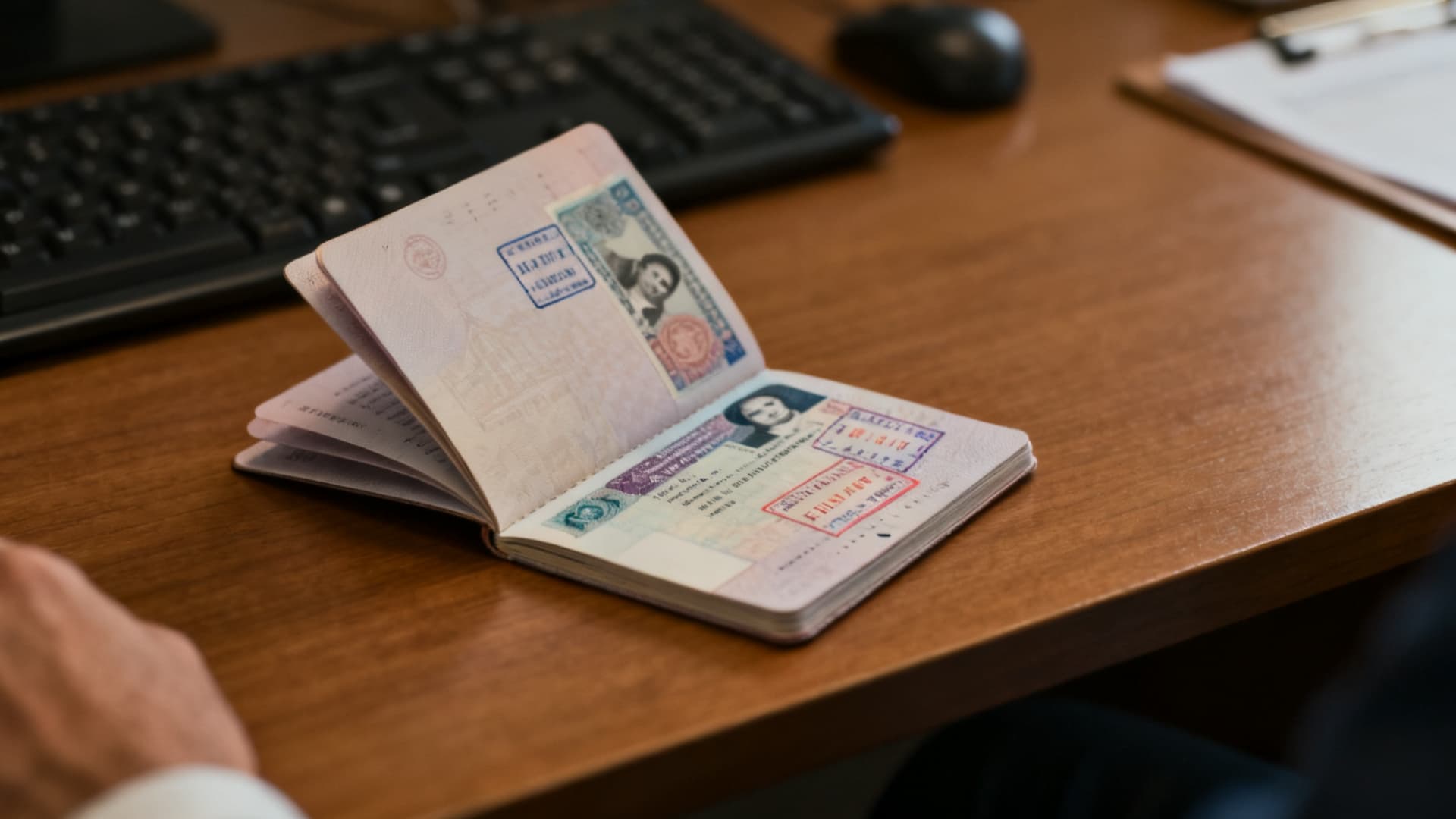
Three different documents that get confused
A VISA is permission to ENTER. It is pasted into the passport before the trip and states how many times and until what date you may cross the border.
A STAY PERMIT extends the time you may remain on a visa you already hold. It is issued inside the country when the visa runs out but it is too early to leave.
A RESIDENCE PERMIT is the document for those living in the country long term: working, studying or joining family. It replaces the visa and itself grants the right to enter and leave.
The practical difference: your permitted stay is counted from the entry stamp, not from the visa date. That is what to look at — it states the date by which you must leave.
The main visa types
Tourist (L) — travel and sightseeing, with no right to work or conduct business.
Business (M and F) — negotiations, trade shows, factory visits. Paid employment is not allowed on it either.
Work (Z) — arranged by the employer and requiring a work permit; after entry it is exchanged for a residence permit.
Study (X) and family (Q, S) — on an invitation from a university or a relative.
Transit and visa-free transit are a separate matter with their own time limits and list of cities; those rules change most often of all, and need checking before every trip.
Worth knowing
Working on a tourist or business visa is an offence carrying deportation and an entry ban. It is not a grey area but direct grounds for removal. The route to legal employment is in the work-permit guide.
Extending your stay
Apply early
The official guidance is to apply no less than seven days before your permitted stay ends. In practice allow more: the queue, bringing missing papers and the check itself all take time.
Go to the exit-entry administration
To the office covering your REGISTERED address. Not where you entered the country and not where you work — the address where you are registered.
Gather the documents
Passport, address registration, the form, a photograph to the required specification and a reason for the extension. Without registration the application will not be accepted — it is the first thing they check.
The exact list differs by city. Check the website of the administration for your own city before applying.
Leave the passport and wait
Processing takes several working days, and your passport stays with the authority for that time. Plan so that you will not need it on those days — not for a flight, not for a hotel, not for the bank.
Careful
Overstaying even by a day means a fine for each day and a record that resurfaces the next time you apply for anything. If you realise you will not make it, go to the administration BEFORE the deadline and explain: that is a fundamentally different matter from turning up afterwards.
What happens when you change passports
The visa and the permit stay in the old passport, and it is not cancelled automatically — keep it and carry it together with the new one.
The correct route is to have the valid permit transferred into the new passport at the exit-entry administration. Until that is done you need both passports together: the old one proves your status, the new one your identity.
After replacing your passport, update your address registration and the details wherever the passport was recorded: the bank, your employer, your university.
Tip
The rules and document lists differ by city and change often. Before applying, check the website of the administration for your own city — last year’s instructions off the internet are a poor source here.
Checked: 4 September 2026
Editor: The PANDA editorial team
What you can hand to PANDA


Sources
- National Immigration Administration of the PRCofficial source
- Chinese Visa Application Service Centerofficial source
- Ministry of Foreign Affairs of the PRC, consular affairsofficial source
- PRC government portal for foreignersofficial source
Didn’t find the guide you needed?
Describe it in your own words — a concierge will reply and take you through it step by step.