Food
How to find a good restaurant rather than a tourist trap
Restaurants with an English menu and a tout at the door are almost always worse and dearer than the ones nearby — and Dianping is how you find the ones nearby.
Where to look
Dianping (大众点评) is the local directory of venues with reviews. It is what Chinese people actually use, and it holds an order of magnitude more data than the foreign services you are used to.
Meituan is the same plus delivery and vouchers. Often it is the same venue with the same listing, simply in a different app.
The interface is Chinese but usable without the language: photographs, numbers and the map speak for themselves, and the name and address can be copied into a translator or a map.
How to read a listing
The rating
The scale goes to five. Anything above 4.5 with a large number of reviews is dependable. A flat 5.0 on two dozen reviews is a reason to be wary.
The number of reviews
This matters more than the score itself. A thousand reviews at 4.4 beats thirty at 4.9: the first is a settled reputation, the second is chance or a bought score.
Average spend
The figure next to 人均 is the average spend per person. It is the most honest guide to price: the photographed menu may be out of date.
Customers’ photographs
Look not at the promotional shots but at the ones customers have posted. They show the real portions and the real room.
The queue
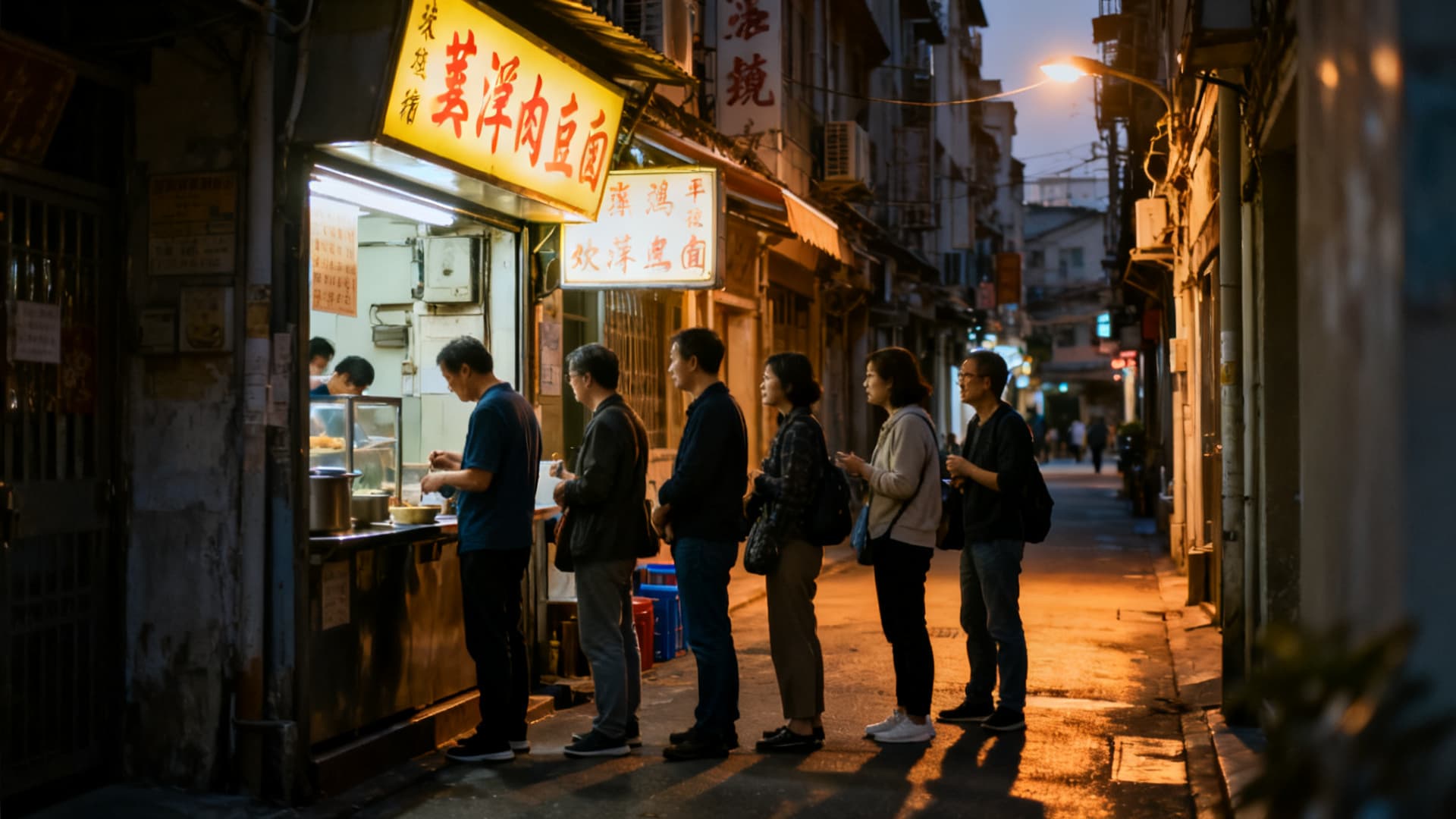
Popular places have an electronic queue in the app: take a number remotely and arrive for your slot. A queue of locals at the door is a good sign, not a reason to walk away.
Tip
A simple rule in the street: look at who is inside. A place full of locals at lunchtime will almost never disappoint; an empty room with English-captioned photos in the window almost always will.
A few more things worth knowing
Vouchers on Meituan and Dianping are a real discount rather than bait: a fixed-price set often costs less than the same dishes off the menu.
Booking a table is less common in China than waiting in the queue. Popular places in the evening often take no reservations at all.
Tipping is not the custom. It is not expected and often not understood; money left behind may be chased after you to the door.
Many places close between lunch and dinner, roughly from two until five. The opening hours in the listing are accurate.
Checked: 4 September 2026
Editor: The PANDA editorial team
What you can hand to PANDA


Sources
- PRC government portal for foreignersofficial source
- Ministry of Culture and Tourism of the PRCofficial source
Didn’t find the guide you needed?
Describe it in your own words — a concierge will reply and take you through it step by step.