Food
How to order food if you don’t speak Chinese
In most Chinese places you order not from a waiter but through a QR code on the table — which is good news if you do not speak the language.
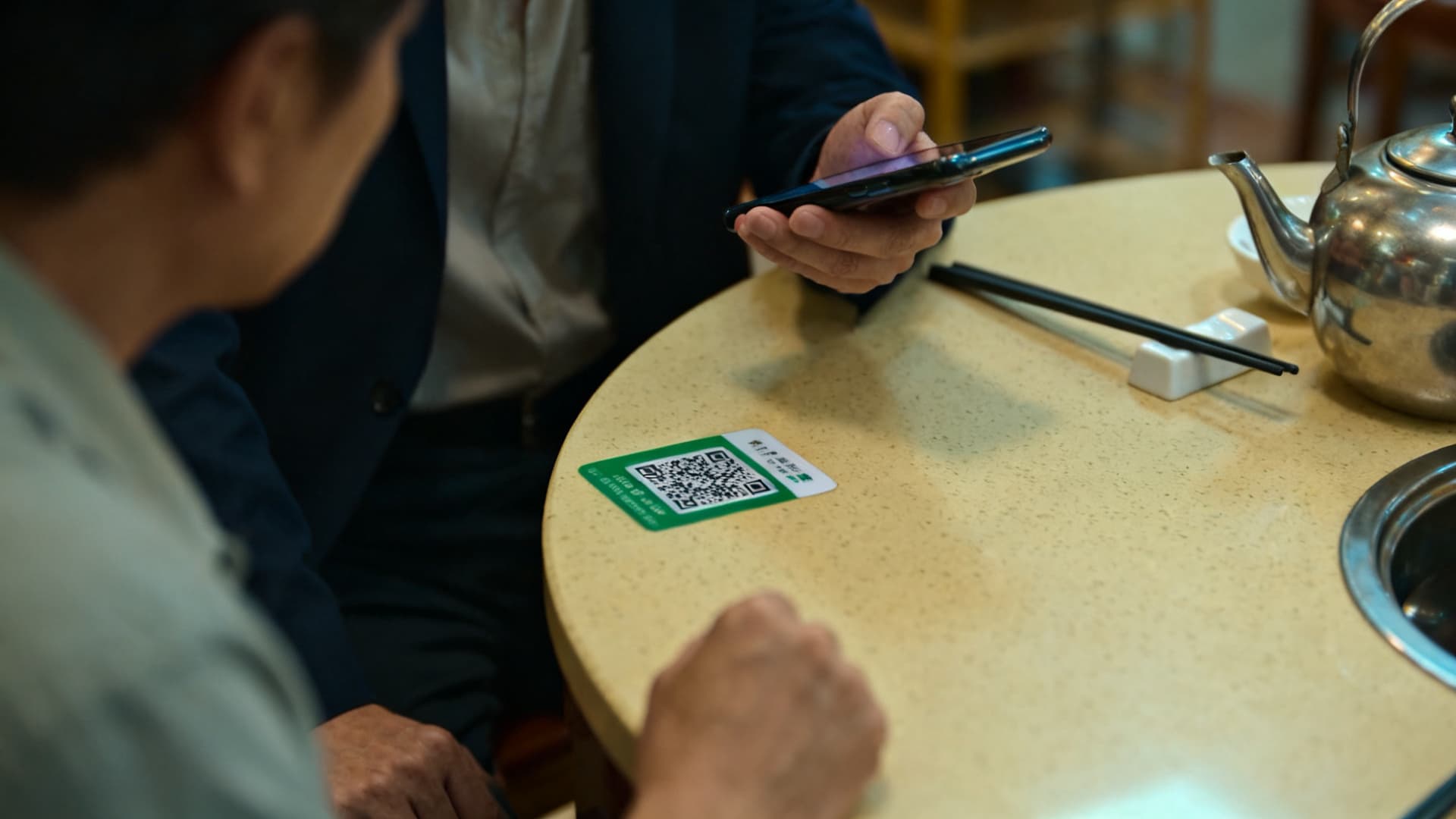
Ordering by QR
Scan the code on the table
With the scanner inside WeChat or Alipay. A mini-programme with the menu opens — there is nothing to install.
Find the table number
It is usually filled in automatically from the QR. If the app asks, the number is printed on the sticker itself or on a small stand.
Build the order
Menus almost always have photographs, which does the job of a translation. Some mini-programmes switch to English — look for 语言 or EN.
Send it and pay
Payment goes through in the same app, before the food arrives. In some places you are served first and settle at the end — also by QR.
Tip
If the QR will not scan or the mini-programme will not open, gesture for a paper menu. Almost everywhere has one, it just lives under the counter.
Camera translation
Point your translation app’s camera at a paper menu and the text is translated on screen. It works on signs and price tags too.
Machine translation of Chinese dish names can be literal and alarming. Go by the ingredients in the description rather than the name: what reads strangely is often an ordinary dish.
Pleco as a dictionary is more useful than a general translator: it shows the meaning of each character, and dish names usually encode the cooking method and the main ingredient.
Spice and portion size
Spice is the commonest misunderstanding. “Not spicy” is 不要辣 (bú yào là). “A little spicy” is 微辣 (wēi là). Showing the phrase on a screen is more reliable than saying it.
Bear in mind that in Sichuan and Hunan cooking “not spicy” can still be noticeably hot: there the heat is part of the base flavour, not an addition.
Portions are sized for a group sharing a table. Two people usually need two or three dishes plus rice; ordering “a dish each” almost always means food left over.
Rice is ordered separately — it does not come as standard. Tea is charged for in some places and free in others; the bill will show which.
Worth knowing
If you have an allergy or avoid certain foods, “without that” is not enough: stocks and sauces in Chinese cooking are made in advance. How to say it so you are taken seriously has its own guide.
Checked: 4 September 2026
Editor: The PANDA editorial team
What you can hand to PANDA


Sources
- PRC government portal for foreignersofficial source
- State Administration for Market Regulation of the PRCofficial source
Didn’t find the guide you needed?
Describe it in your own words — a concierge will reply and take you through it step by step.